
You’ve spent hours staring at flat diagrams that don’t quite click. That’s where 3D canine anatomy changes everything. With interactive dog anatomy models, you can see how bones, muscles, and organs fit together in real space—making complex ideas stick and sharpening your clinical skills. Ready to explore how EasyAnatomy can boost your learning and confidence? Learn more about this transformation.
Enhancing Veterinary Education
3D canine anatomy transforms traditional learning by allowing you to interact with complex structures. This change makes understanding easier and more engaging. Let’s explore how these tools benefit your study.
Interactive 3D and AR Benefits
Interactive 3D and augmented reality (AR) models offer a unique view of canine anatomy. Imagine peeling back layers of muscles and bones with just a click or swipe. This hands-on approach significantly enhances the learning experience. Unlike flat images, these models provide depth and clarity, showing how structures connect and function together.
With AR, you can bring these models into your real-world environment. This means you can study anatomy on your desk, making it feel like you’re holding the actual organs and tissues. This immersive experience is especially beneficial in courses like surgery and dissection, where spatial understanding is crucial. Most students find this interactive method much more effective than traditional textbooks. To see these models in action, check out this video demonstration.
Boosting Spatial Understanding
Understanding the spatial relationships between anatomical structures is vital in veterinary education. Interactive 3D models make this easier. With these models, you can rotate, zoom, and explore every angle. This flexibility helps you grasp how structures are positioned relative to one another.
When you can see how different parts fit together, it strengthens your memory and understanding. It’s like having a personal dissection lab at your fingertips. This clarity is invaluable when you move into clinical settings. Many students report that their confidence in recognizing and identifying structures improves significantly with 3D modeling.
Improving Clinical Reasoning
Developing solid clinical reasoning skills is a key part of veterinary training. Interactive anatomy tools support this by providing realistic scenarios and problem-solving opportunities. With EasyAnatomy, you can engage in virtual dissections and case studies that mirror real-life situations.
These exercises encourage critical thinking and decision-making. As you explore different anatomical systems, you’re prompted to consider how certain conditions or injuries might affect the body. This practice is essential for honing your diagnostic skills. The ability to visualize anatomy in 3D improves your ability to reason through complex clinical problems.
EasyAnatomy: A Game Changer

EasyAnatomy is changing how veterinary students and professionals learn. It’s a comprehensive tool that combines interactive 3D models, quizzes, and cross-device compatibility. Let’s dive deeper into what makes it a standout platform.
Comprehensive Canine Cadaver
The app offers a detailed canine cadaver model, which is a game-changer in anatomy education. This model covers all major systems and allows you to explore them in-depth. You can view each organ and structure as if you were performing an actual dissection.
This feature is particularly useful for students who need to review anatomy outside of lab hours. It’s also a great tool for educators, providing a clear visual aid for lectures and discussions. The realism of these models is unmatched, offering an experience that traditional textbooks cannot replicate. For more insights into how this helps in veterinary education, check out this research article.
Engaging Anatomy Quizzes
EasyAnatomy includes a variety of quizzes designed to reinforce learning. These quizzes are adaptive, meaning they adjust to your performance and focus on areas where you need improvement. This personalized approach ensures that you’re always challenged and engaged.
The quizzes cover different topics and difficulty levels, making them suitable for students at various stages of their education. Regular practice with these quizzes helps solidify your knowledge, making it easier to recall information when needed. This feature is a favorite among students who want to track their progress and identify knowledge gaps.
Cross-Device Learning
One of the best features of EasyAnatomy is its cross-device compatibility. Whether you’re using a computer, tablet, or smartphone, you have access to the same comprehensive resources. This flexibility means you can study whenever and wherever it’s convenient for you.
Having access to your study materials on multiple devices ensures you’re never without the tools you need to learn. Whether you’re reviewing in a café or taking a quick study break between classes, EasyAnatomy adapts to your schedule. Learn how this approach fits into various study routines by visiting this educational project.
Getting Started with EasyAnatomy
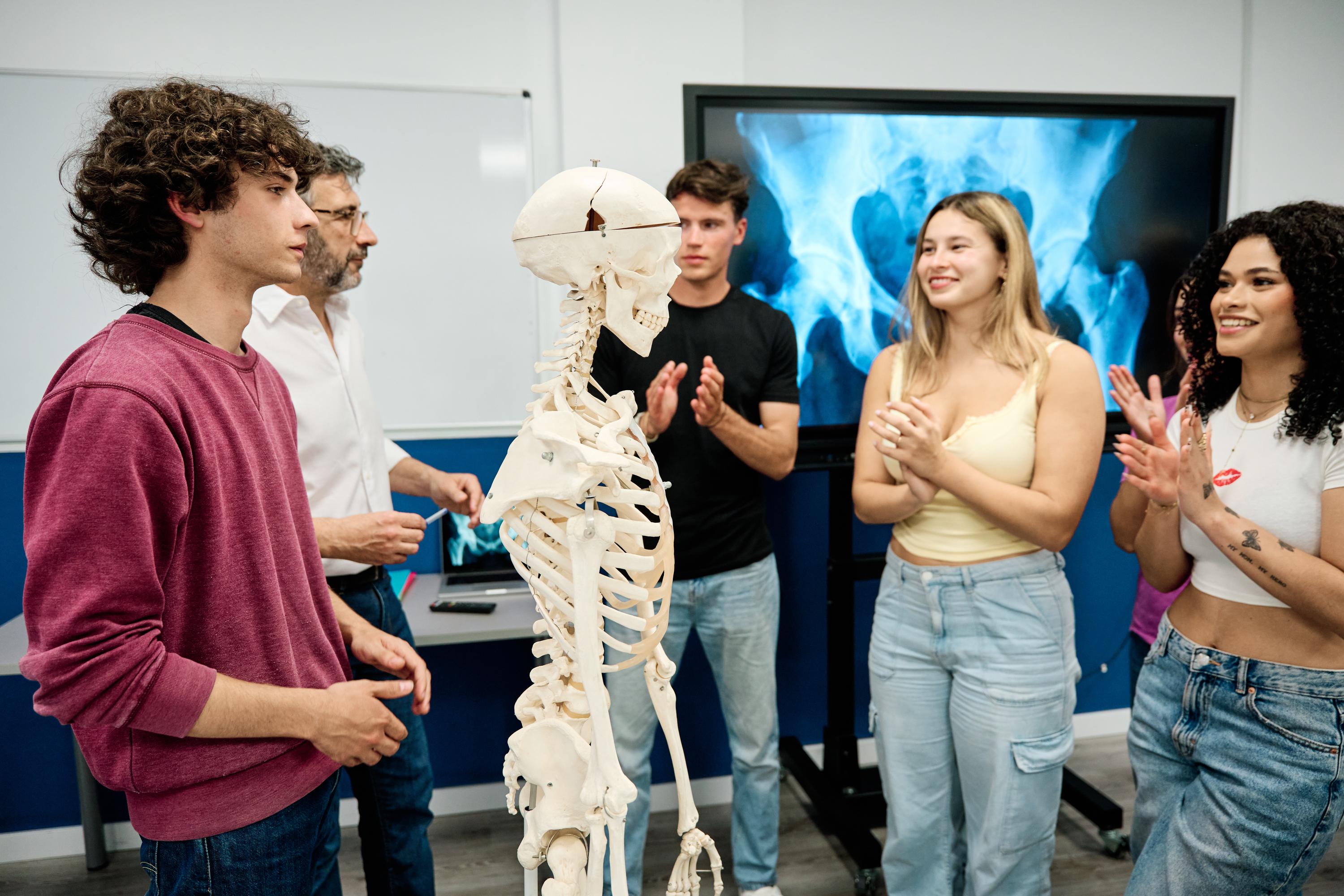
Ready to integrate EasyAnatomy into your study routine? Here’s how you can get started and make the most of what this platform offers.
Free Trial for Students
EasyAnatomy offers a free trial for students, allowing you to explore all its features without any initial commitment. This trial is a great way to experience the benefits firsthand and see how it can enhance your learning.
During the trial, you can access the comprehensive canine cadaver, engage in adaptive quizzes, and utilize the AR features. This experience will give you a clear understanding of how EasyAnatomy can fit into your study habits and improve your knowledge.
Setting Up a Campus Demo
Educational institutions can arrange for a campus demo of EasyAnatomy. This allows educators and students to experience the platform together and see its potential impact on learning. A demo can be customized to focus on specific courses or areas of interest.
This collaborative approach ensures that everyone involved understands how EasyAnatomy can be integrated into the curriculum. Institutions that have adopted EasyAnatomy report improved student engagement and better learning outcomes.
Practitioner Subscription Benefits
Veterinary practitioners can also benefit from EasyAnatomy’s features. A subscription provides access to detailed anatomical models that can be used for client communication and continuing education. This tool helps practitioners explain complex conditions and procedures in a way that clients can easily understand.
The subscription also includes regular updates and new content, ensuring you always have the latest information at your fingertips. It’s a valuable resource for any practitioner looking to enhance their practice and client interactions.
Frequently Asked Questions
What is EasyAnatomy?
EasyAnatomy is a 3D anatomy learning platform designed for veterinary students, educators, and practitioners. It offers interactive models, quizzes, and augmented reality features to enhance understanding of canine anatomy.
How does EasyAnatomy help with spatial understanding?
EasyAnatomy provides 3D models that allow users to view anatomical structures from all angles. This helps in understanding how different parts of the anatomy relate to each other, improving spatial awareness and retention.
Can EasyAnatomy be used on multiple devices?
Yes, EasyAnatomy is compatible with various devices, including computers, tablets, and smartphones. This cross-device access ensures you can study anytime, anywhere, making it a flexible tool for busy schedules.
Are there quizzes available in EasyAnatomy?
Yes, EasyAnatomy includes adaptive quizzes that adjust to your learning needs. These quizzes help reinforce knowledge by focusing on areas where you need improvement, making them a valuable study aid.
What makes EasyAnatomy different from traditional textbooks?
Unlike textbooks, EasyAnatomy offers an interactive 3D experience that brings anatomy to life. With features like virtual dissection and augmented reality, it provides a more engaging and effective way to learn complex anatomical structures.